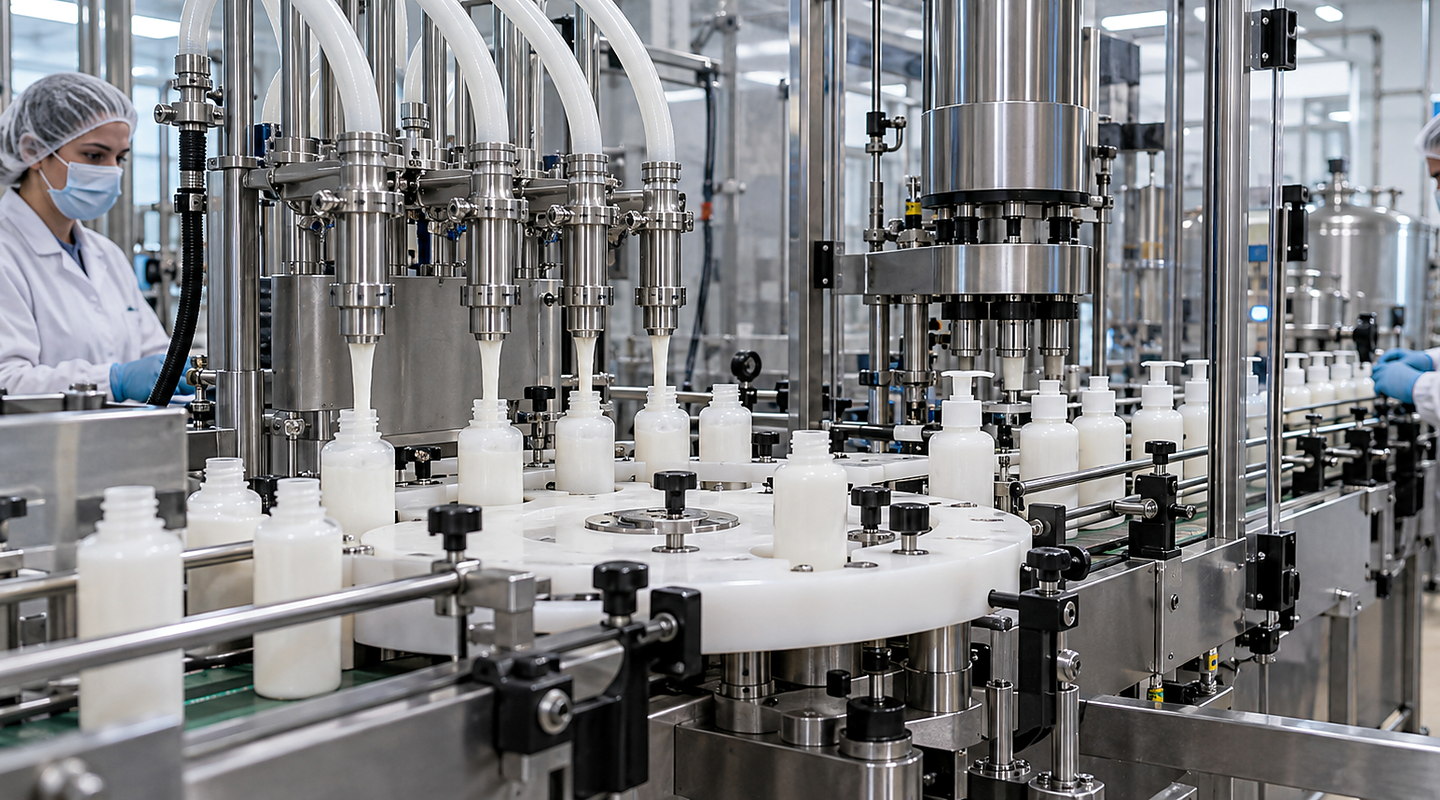
Serum Bottle Filling: How the Process Works
Follow skincare serum from bottle presentation and dosing to dropper or pump fitting. Check fill amount, nozzle drips and closure seating on the actual bottle.
Plan serum bottle filling as a linked sequence: present the bottle, dose the agreed formulation, fit its specified closure and check the finished bottle. Assess nozzle access, drips and closure seating together using the actual bottle and complete dropper or pump set.
Record the formulation, fill range and operating pattern for each trial. Use the acceptance checklist to agree which observations demonstrate a suitable result and which questions remain open.
Understand the complete route from input to accepted output — Serum Bottle Filling
Plan serum bottle filling around your product, pack range, target output, cleaning needs and finished-pack checks. Discuss a practical line concept with Lancing using representative samples. Follow the material or part through each operating step and include recovery, cleaning and change in the real cycle.
Discuss your application

Four clear stages for serum bottle filling
Keep a separate record of fill amount, visible drips and closure fit for each formulation and bottle tested. If one check fails, identify that step before extending the result to another format.
- 01
Review Representative Product and Pack Samples
Provide representative serum and the complete bottle and closure set for each proposed format. Identify formulation or supplier changes, the required fill range and the samples that need separate assessment.
- 02
Trial the Dosing, Handling or Closing Method
Trial dosing and nozzle access with the nominated product and bottle, then assess the proposed closing step with the actual dropper or pump components. Record fill results, visible drips and closure seating separately so a problem in one step is not hidden by an acceptable result in another.
- 03
Integrate Infeed, Discharge, Controls and Access
Review bottle arrival, support during filling, transfer to closing and discharge into the next operation. Agree the line interfaces, operator access and response when filling or closing cannot continue; do not assume the adjacent equipment will accept every bottle condition.
- 04
Run Agreed Production and Changeover Checks
Use the agreed production pattern to review replenishment, short stops, cleaning and product or bottle changes. Confirm the checks required before restarting and record how bottles outside the agreed fill or closure criteria will be handled.
Decisions and results stay connected
| Stage | What happens | What you can review |
|---|---|---|
| Review Representative Product and Pack Samples | Confirm the requirements for skincare serum bottle filling, the operating range and the definition of a good result. | Your samples, current information and any points that still need confirming. |
| Trial the Dosing, Handling or Closing Method | Compare workable methods using skincare serum bottle filling product behaviour and container, bag or pack range from your real production. | The trial method, observations and reason for the recommended route. |
| Integrate Infeed, Discharge, Controls and Access | Resolve target dose, count or pack weight, required output and production pattern and the physical, control, safety and data connections. | The agreed layout, line connections and any changes from the proposal. |
| Run Agreed Production and Changeover Checks | Check normal, difficult and fault conditions before your team takes over the system. | Results for cleaning, access and changeover method and finished-pack checks and reject handling, plus actions and operating information. |
Keep connected responsibilities clear
Your final serum bottle filling scope must also account for cleaning, access and changeover method, finished-pack checks and reject handling, current regulations and the conditions at your site.
- The selected method must be trialled with representative product and packaging.
- Supplier tolerances and product-condition changes can alter handling or fill behaviour.
- Equipment selection does not replace product, hygiene, packaging or regulatory validation.